September 30, 1893
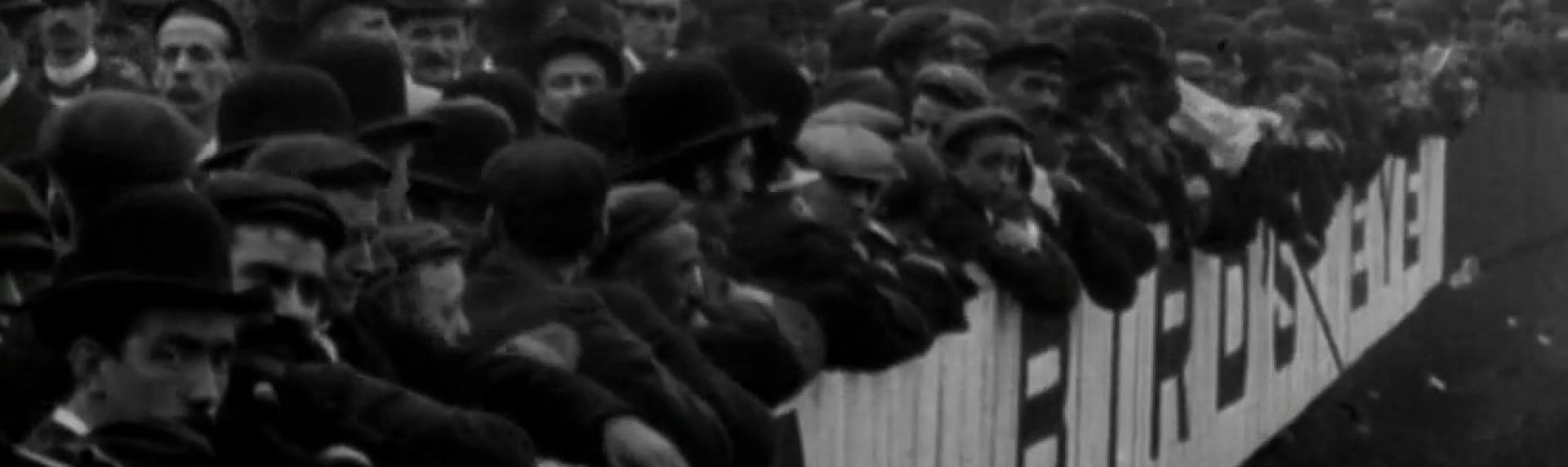
It is too early yet to form anything like a correct estimate of the ultimate leaders in the second division, but both Liverpool and Small Heath are strong candidates for places, and the match on Saturday should give us some idea of the abilities of the two clubs. That the match was looked upon as one of more than ordinary importance was evident from the numerous attendance at Anfield.
The game too, fully came up to expectations. It took the players some little time to get into working order, especially the home lot, but when Caesar Jenkyns scored after a few minutes’ play both teams settled down to business. Up to this point Liverpool had had most of the play, but the visiting forwards had put in some quick runs which tested the Liverpool defence somewhat severely, and it was from one of these bursts that Jack Hallam and John Lee forced the corner which resulted in the Liverpool sheet being blotted.
Each side now put in all they knew, but of the two, Liverpool had the better of the play. The equalising goal seemed a long time coming, but eventually James Stott sent a high one in which proved too much for George Hollis. The game continued to favor Liverpool, and some splendid centres were put in by Patrick Gordon and Hugh McQueen, only to be dealt with by Hollis or allowed to roll out of play. At last David Henderson had a chance from work done by Gordon and Malcolm McVean, and when everybody thought he was going to make a mess of it he coolly placed the ball in the net. It was now the “Heathens” turn, and in several runs they caused the Liverpool supporters some anxiety, but they were dreadfully erratic in shooting and everything passed off all right.
The visitors were even more tantalising after the re-start, for William McOwen had to be very smart in dealing with two shots, especially one from Fred Wheldon. It took the Liverpool men some time to gain a foothold in their opponents’ quarters, but they plodded on, and when once established they stuck. Under severe pressure Hollis displayed fine form in goal, but Stott eventually worked his way through three opponents and scored the third goal. The shot was a good one, but the work leading up to it was better. There was now only one team in it, for the visitors were thrown on the defensive, and a good game resulted in a win for Liverpool by three goals to one.
I was pleased with the match, for there was not a passenger in the whole twenty-two players. Henderson, the new Liverpool centre, however, did not “stay the course,” but if he was a little clumsy he was generally in the ruck of it. He evidently knows his duty, but he was not as effective centre-forward. He was hardly class enough, and several of the beautiful centres put in by Gordon and H. McQueen deserved a better fate tan being allowed to go into touch. All the same, the opposing wings were very much to blame, for it was noticeable that when centre from the left came in the right were not up to take it, and vice versa. This is the only fault I have to find with the forwards play, for on the whole they god through their work in a creditable manner, but like most players their efforts wanted that effectiveness in front which alone tells.
The half-backs, as usual, did well though the opposing forwards were a little too quick for them. This, however, was only occasionally, and then one or the other generally came to the rescue. James McBride in this way was a decided success, and this player was prominent in good work all the afternoon. Collectively the two backs were good, but Duncan McLean was the better of the two. He was always in the thick of the fight, and his burly form was seen to emerge from many a stiff struggle. McOwen had nothing great to do, but on the few occasions e was tested he proved reliable.
The Small Heath team played a more ragged game, and seeing they scored first it is to be wondered at. All through they were overplayed, but there were periods when one expected more from them. It was these times they did the least for in several bursts good football was shown, only to be thrown away by erratic work at the finish. The forwards did not put in the same amount of pressure as the home lot, and it is significant that their best efforts came from sprints up the field. When on the attack pure and simple they were very weak, but in sprints they were dangerous. There is very little in the teams and the result may be reversed a fortnight hence.
(Source: Cricket and Football Field: September 30, 1893)
 "Play Up, Liverpool"