August 18, 1910
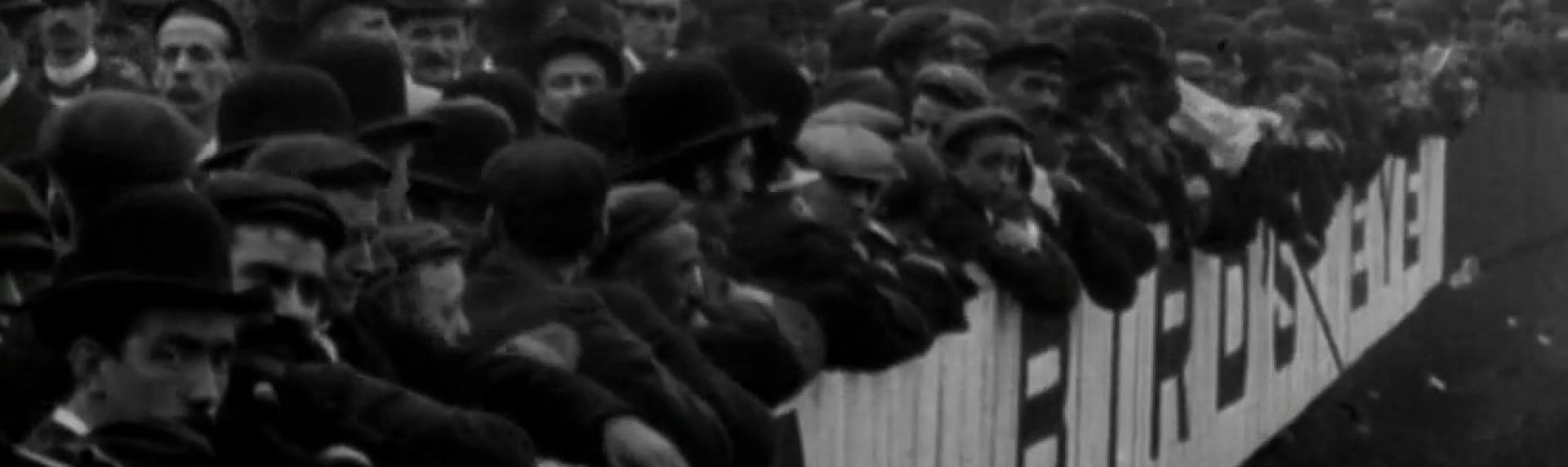
It would be difficult to conceive more pitiable conditions than those prevailing on Thursday evening, the time appointed for Liverpool’s first public practice match. For hours before the start it rained heavily and persistently, whilst during play the downpour not only continued but seemed to increase in volume.
Under such conditions half an hour each way sufficed to satisfy the most hungry enthusiast, as it must certainly have done the players, who denied themselves of the usual interval in an endeavour to get the trial finished as quickly as possible.
It would be unfair to too seriously criticise the efforts of the men under the circumstances; yet, let it be said that a rousing and enjoyable display was given on the whole, and that the three or four thousand enthusiasts who braved the untoward elements were put in a generous mood; their favours being liberally bestowed as first one and then another player caught the eye with a smart or dashing piece of work.
The chosen sides were Reds v Whites, the former practically comprising last season’s League team, whilst the Whites eleven were made up with six of last season’s Liverpool players and five recruits, the full sides being as follows: –
Reds: Sam Hardy, Robert Crawford, Tom Chorlton, Robert Robinson, Jim Harrop, James Bradley, Arthur Goddard, James Stewart, Jack Parkinson, Ronald Orr, John Macdonald.
Whites: Gus Beeby, Ephraim Longworth (Leyton), Alf West (Reading), John McConnell, Ernest Peake, Donald Mackinlay, Herbert Leavey (Plymouth Argyle), Joe Brough (Burslem), Sam Gilligan (Bristol City), Sam Bowyer, Harold Uren.
Harrop’s untimely intervention.
The opening stages were evenly contested, but after 15 minutes’ play Leavey crowned some clever work by his forwards with a grand goal. Five minutes later Mackinlay tried a shot, which was travelling towards the far corner of the goal, with Hardy in readiness, when Harrop came on the scene to intercept the ball; but instead of acting the part of relieving officer he only added to the Reds’ misery by turning the ball into the bet at the opposite corner to where Hardy stood.
We had not yet done with the surprises, for a few minutes later the new right wingers were again in evidence, and Gilligan, receiving from Leavey, judged the position to a nicety; and again were Hardy’s colours lowered as the result of a rare shot. Thus the interval arrived with a most unlooked for condition of things prevailing, seeing that the recognised League team were three goals in arrear!
Honours even.
However, after crossing over Parkinson and Co. were witnessed in more determined mood. The noted centre was especially formidable, and after indulging in several great bursts he eventually waded in with a rattling goal. Then came further rare sport as Stewart drove the ball home and under the netting, whilst a little later Parkinson nobly led the way in brilliant fashion for the equalising goal.
He worked close in and then crossed the ball to Goddard, who did the rest. With the game 3-3 the battle was being well waged when Leavey centred beautifully for Gilligan to volley the ball past Hardy at a great rate. But the Reds still showed their fighting qualities when Macdonald put across a long centre for Parkinson to head past Beeby, thus making the final 4-4, and everybody satisfied.
Remarks.
Taking the awful night into consideration much good football was shown, and the new men on the whole won marked approval. Especially was this the case concerning the fresh forwards on view. Leavey created a particularly good impression, which I hope to find confirmed later. As one stated a fortnight ago, in appearance his “meuld” bears a marked resemblance to Macdonald’s.
He possesses at useful turn of speed, and combined nicely with Brough, but what pleased me most was the able, prompt, and accurate manner in which he crossed the ball when on the run, despite the slippery nature both of the turf and the ball.
His partner, Brough, is a second Stewart in build – little, and let us hope, good. He certainly promises well as a provider, for he attended to his comrades’ needs in praiseworthy fashion.
In the centre Gilligan displayed rare general-ship and ability – a thorough footballer in every way. His two goals were splendidly fired home. Of the other new men, both Longworth and West were often at a disadvantage in having to cope with smart passing forwards on a treacherous ground, still there was merit in what both accomplished in defence, and also as tacklers.
Seniors took matters quietly.
Mackinlay was seen in the strange position of left half, for he came to Liverpool as a full-back, but on the whole he gave a rare good tackling display versus Goddard and Stewart. Of course, one or two of the seniors occasionally took matters rather quietly. None gave greater satisfaction than Harrop and Parkinson, although the latter got very little of his own way against Peake before the interval.
The Welshman is an accomplished pivot, but he cannot yet hope to oust Harrop. Beeby, like Hardy, brought off some fine saves. Taking all in all, one feels confident that Liverpool will be able to place two splendid teams on the field; and a much improved reserve team reads a certainty.
One or two of the Leaguers are a bit on the heavy or “overweight” side as yet, but this should be remedied before the season dawns. By the way, the new roof which is being placed on the Anfield-road stand is a splendid one, and the work is now almost complete.
(Cricket and Football Field: August 20, 1910)
 "Play Up, Liverpool"